
Best Options for Tired Eyes That Actually Help
Tired-looking eyes can make you feel less like yourself, even after a full night of sleep. The best options for tired eyes start with understanding what is creating the look in the first place. Under-eye hollows, puffiness, dark circles, fine lines, drooping brows, and loose skin can all create a fatigued appearance, but they do not respond to the same treatment.
A thoughtful plan should refresh your expression without changing the features that make you look like you. For many people, that means combining practical habits with non-surgical treatments selected around their anatomy, skin quality, and goals.
Why Eyes Can Look Tired Even When You Feel Fine
The eye area is thin, expressive, and often one of the first places where aging, stress, allergies, and lifestyle changes show up. Volume loss in the cheeks or tear troughs can create a shadow beneath the eyes. Repetitive facial movement can cause crow's feet and frown lines. As collagen declines, the skin may become thinner and more crepey.
Puffiness is different. It may be related to fluid retention, allergies, salt intake, sleep position, or natural fat pads beneath the eyes. Genetics also play a major role. Some people have under-eye darkness or hollowness from a young age, regardless of how much sleep they get.
This is why copying a friend’s treatment is rarely the best approach. A treatment that beautifully softens wrinkles may do little for deep hollows, while filler placed in the wrong candidate can make puffiness more noticeable.
Best Options for Tired Eyes Based on the Cause
Start with the basics for temporary puffiness and dullness
If your eyes look more tired on certain mornings than others, start by looking at the daily factors. Consistent sleep, hydration, allergy management, and sleeping with your head slightly elevated can help reduce fluid-related puffiness. A cool compress may temporarily calm swelling, and broad-spectrum sunscreen helps protect delicate skin from pigment changes and collagen breakdown.
Topical products can be useful, but expectations should stay realistic. Caffeine-based eye products may provide short-term de-puffing, while gentle retinol products can support smoother skin over time when used carefully. The under-eye area is sensitive, so avoid applying active products too close to the lash line or using more than your skin can tolerate.
These habits support the skin, but they cannot replace volume that has been lost or lift tissue that has descended. If the concern remains the same every day, a professional assessment can identify whether a targeted aesthetic treatment is a better fit.
Botox for crow's feet and a subtle brow lift
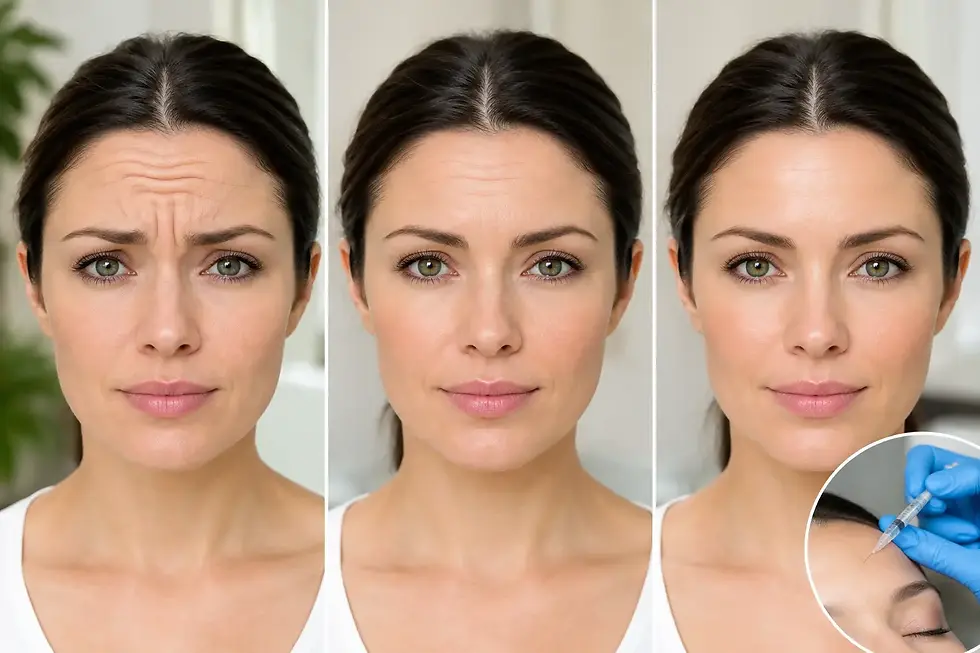
Botox can be an excellent option when tired eyes are caused by expression lines around the outer eyes or a brow that sits lower over time. Small, precise injections relax the muscles responsible for crow's feet, helping the area look smoother and more open. In some patients, carefully placed Botox can also create a subtle brow lift by relaxing muscles that pull the brow downward.
The goal is not a frozen expression. A skilled provider evaluates how your forehead, brows, and eyes move together, then uses a conservative dose that preserves natural facial animation. Results typically appear gradually over several days and often last around three to four months.
Botox does not correct under-eye bags, pronounced hollows, or loose skin. It is often part of a broader plan rather than the entire answer.
Dermal filler for under-eye hollows and shadowing
When the tired look comes from a sunken area beneath the eyes, dermal filler may restore smoother transitions between the lower eyelid and cheek. By replacing carefully selected volume, filler can reduce the shadow that makes dark circles appear more prominent.
Under-eye filler is highly technique-dependent. The skin in this area is thin, and not every hollow should be filled directly. Sometimes restoring volume in the mid-cheek provides a more natural improvement with less product near the eye itself. This is particularly true when a lack of cheek support is contributing to the under-eye crease.
Filler may not be ideal for people with significant swelling, visible under-eye bags, or certain anatomical concerns. A qualified medical provider should assess the area in person, review your health history, and explain both benefits and risks before treatment. Thoughtful placement matters far more than adding volume quickly.
Morpheus8 for crepey texture and skin laxity
Fine lines, crepey texture, and mild skin laxity can make the eyes look worn even when volume is still well balanced. Morpheus8 combines microneedling with radiofrequency energy to stimulate collagen remodeling in targeted areas. Over a series of treatments, it can improve skin texture, firmness, and overall quality.
This treatment is best viewed as a collagen-building process, not an instant fix. Some clients notice early changes in smoothness, while deeper remodeling develops over the following weeks and months. It can be especially helpful for people who want to improve the quality of the skin around the eyes without surgery.
Treatment settings and technique need to be customized for the delicate eye area. The right provider will consider your skin tone, skin thickness, degree of laxity, and history of pigment changes to create a safe, appropriate plan.
Medical evaluation for persistent dark circles or eye changes
Not every concern around the eyes is cosmetic. Sudden swelling, one-sided changes, pain, redness, vision changes, or persistent irritation should be evaluated promptly by a medical professional. Chronic allergies, eczema, sinus issues, iron deficiency, and certain medications can contribute to under-eye discoloration or puffiness.
If excess upper eyelid skin or prominent lower eyelid bags are the main issue, surgery may offer a more meaningful correction than non-surgical treatments. A trustworthy aesthetics provider should be comfortable explaining when a surgical consultation may be the better path.
How to Choose the Right Treatment Plan
The most flattering results come from treating the reason you look tired, not simply treating the area beneath the eyes. During a consultation, your provider should look at your face at rest and in motion, assess facial balance, and ask what you notice most in photos and in the mirror.
Be specific about your priorities. Do you want smoother crow's feet? Less shadow under your eyes? A more lifted brow? Better makeup application? Your answer guides treatment selection and helps set realistic expectations.
It also helps to consider downtime and timing. Botox typically has little downtime, while filler can cause temporary swelling or bruising. Morpheus8 may involve redness and mild swelling for several days, depending on treatment intensity. If you have a wedding, vacation, or professional event coming up, plan ahead rather than booking a new treatment at the last minute.
A Natural Refresh Is the Goal
The eye area deserves a careful, individualized approach. More product is not always better, and the right answer may be a small amount of Botox, strategic cheek support, collagen-stimulating treatment, or a combination that develops gradually.
At Refresh Aesthetics, the focus is on helping you look rested, supported, and confident while honoring your natural features. A personalized consultation gives you space to ask questions, understand your options, and choose a plan that feels right for your face and your comfort level.
Feeling refreshed should not mean looking overdone. When your treatment is guided by anatomy, medical expertise, and your personal goals, the result can be a brighter expression that still feels completely your own.


Comments