
Is Filler for Temples Hollowing Right for You?
A hollowed temple can make the entire face look more tired, angular, or aged than you feel. It is also easy to overlook because many people focus first on the cheeks, under-eyes, or jawline. Yet filler for temples hollowing can be a thoughtful way to restore balance to the upper face when it is performed with a conservative plan and a detailed understanding of facial anatomy.
Temple treatment is not about making this area look puffy or changing who you are. The goal is often to soften a sunken appearance, support smoother facial transitions, and help the face look rested and proportionate. Because the temples are a medically advanced area for injectable treatment, choosing a skilled, qualified provider matters just as much as the filler itself.
Why Temples Begin to Look Hollow
The temples sit at the sides of the forehead, above the cheekbones and behind the outer corner of the eyes. In a youthful face, this area usually has a gentle fullness that blends naturally into the forehead, brow, cheeks, and hairline.
Over time, facial fat pads can decrease and shift. Changes in bone structure, muscle, collagen, skin quality, weight fluctuations, genetics, and even a naturally lean face can all make the temple area appear more concave. For some people, temple hollowing becomes more noticeable after weight loss. For others, it appears gradually with age or has been present for years because of their facial anatomy.
When the temples lose volume, the face can look narrower through the upper third. The forehead may seem more prominent, the brow can appear heavier, and the cheekbones may look sharper. In some cases, restoring this small area creates a more balanced result than adding more volume to the cheeks alone.
What Filler for Temples Hollowing Can Improve
Dermal filler can restore subtle volume beneath the skin, helping smooth the transition between the forehead and upper cheek. With the right placement, treatment may soften a skeletal or scooped appearance without creating an obviously "filled" look.
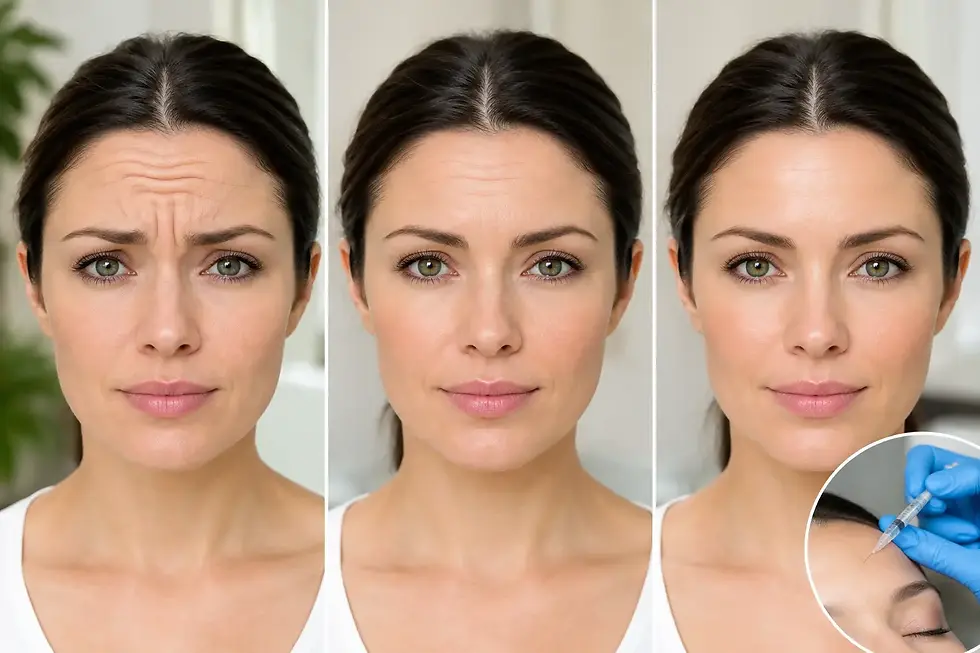
Many clients notice that temple filler can make the face appear more refreshed, even when the change is modest. It may also complement other aesthetic treatments. For example, clients who receive neuromodulator treatments for forehead lines or brow concerns sometimes find that restoring temple volume supports a softer, more harmonious upper-face appearance.
The right result should look like you on a well-rested day. A qualified injector will assess your face from multiple angles and in motion, rather than treating one hollow in isolation. Facial balancing is personal. A treatment plan that looks beautiful on one person may not suit another person’s bone structure, skin thickness, or goals.
Temple filler is not always the first answer
Volume loss is only one reason the temple area may look shadowed. Skin laxity, brow position, facial shape, significant weight changes, or lighting can also contribute. If the concern is mostly skin quality, a collagen-stimulating treatment such as RF microneedling may be part of the conversation. If the concern is movement-related lines around the forehead and brows, a neuromodulator may be more appropriate.
Sometimes the best plan combines treatments over time. Other times, the most confident recommendation is to leave an area untreated. A personalized consultation should give you a clear answer, not pressure you into more injections.
Which Fillers May Be Used in the Temples?
Hyaluronic acid fillers are frequently considered for temple hollowing because they can add volume with a soft, adaptable feel and can be dissolved if medically necessary. Different hyaluronic acid formulas have different levels of firmness, spread, and lifting capacity, so product selection should be based on your anatomy and the amount of correction needed.
Some providers may recommend biostimulatory injectables for appropriate candidates. These treatments work differently from hyaluronic acid filler and may encourage collagen production over time. They can be useful for broader volume support, but they are not reversible in the same way and require careful patient selection.
There is no single “best” temple filler for every person. The correct choice depends on how hollow the area is, whether you want immediate or gradual improvement, your medical history, your timeline, and the provider’s clinical assessment. A careful injector may also begin conservatively and build gradually instead of trying to create a complete correction in one appointment.
Safety Matters More in the Temple Area
The temple contains important blood vessels and complex anatomy. That makes this one of the higher-risk areas for dermal filler treatment. Although serious complications are uncommon, they can occur with any filler injection and require prompt medical attention.
For that reason, temple filler should never be treated like a quick add-on service. It deserves a thorough consultation, informed consent, sterile technique, precise product placement, and a provider who understands how to recognize and manage complications. Your provider may use a needle, a cannula, or a combination of techniques depending on your anatomy and treatment plan. Neither approach is automatically risk-free.
Before treatment, share your full medical history, allergies, medications, supplements, prior filler treatments, and any history of autoimmune conditions, bleeding issues, or recurrent cold sores. You may be advised to avoid certain medications or supplements that can increase bruising, but never stop prescribed medication without guidance from the clinician who manages it.
After treatment, mild tenderness, swelling, bruising, or a feeling of fullness can be normal. These effects are usually temporary. Contact your provider immediately for severe or worsening pain, unusual blanching or discoloration of the skin, changes in vision, increasing redness, or any symptom that feels concerning. Fast communication matters.
What Happens During a Temple Filler Appointment?
A good appointment starts well before the injection. Your provider should ask what you see when you look in the mirror, what has changed over time, and what kind of result feels natural to you. Photos may be taken for treatment planning and to help you compare your results later.
The skin is cleansed, and a topical numbing option may be used. Many modern fillers also contain lidocaine to improve comfort. Your provider then places small amounts of product strategically, assessing balance as they go. The injection portion may be relatively quick, but the consultation and precise planning should never feel rushed.
You may see improvement right away, though swelling can make the area look slightly fuller at first. Most people return to normal activities the same day. It is often wise to avoid strenuous exercise, excessive heat, alcohol, and pressure on the treated area for the timeframe your provider recommends.
Results can last many months, but longevity varies. The type and amount of filler, your metabolism, movement in the area, and your natural rate of volume loss all play a role. Follow-up treatment is often lighter than the first appointment because your provider is maintaining a result rather than starting from scratch.
How Much Temple Filler Is Needed?
Temple volume loss can look minor on the surface while requiring more product than expected for a smooth, balanced correction. On the other hand, a small amount may make a meaningful difference for someone with mild hollowing. Treating both sides symmetrically is common, but faces are naturally asymmetrical, so identical amounts are not always the goal.
Rather than shopping by syringe count, focus on a plan. An ethical provider will explain the recommended amount, whether staged treatment makes sense, and what can realistically be achieved in one visit. If budget is a factor, it is reasonable to prioritize the areas that will make the greatest visual difference and continue gradually.
Choosing a Provider You Can Trust
Temple filler calls for more than a quick before-and-after photo. Look for a licensed medical professional with advanced injectable experience, a strong knowledge of facial anatomy, and a conservative aesthetic eye. You should feel comfortable asking what product is being used, why it was selected, how complications are handled, and what follow-up support is available.
At Refresh Aesthetics, treatment planning is centered on your features, goals, and comfort level. The best aesthetic care feels personal: you are heard, your questions are answered clearly, and your plan respects the face you already have.
If your temples have started to make you look more hollow, tired, or angular than you feel, a consultation can help you understand whether filler is the right next step. A subtle, well-planned treatment may be all it takes to bring a little softness and confidence back into view.


Comments